
PDR-Team joins Solvd Group: E2E claims management – now also in hail damage
Solvd Group expands its end-to-end claims and repair ecosystem with a best-in-class hail solution offering
Munich, 27.03.2026
The Solvd Group, one of the world’s leading companies for digital claims and repair management, today announces that PDR & Careoss Group from Mutlangen (Baden-Württemberg) are joining its group. As hail events become more frequent and severe due to climate change, this move adds a decisive component to the Allianz Partners mobility ecosystem: the physical repair of vehicles in large-scale hail loss events – the most complex and unpredictable scenario in claims and repair management. The transaction is subject to customary closing conditions, including merger control approval, and is expected to close in the second quarter of calendar year 2026.
Solvd Group is part of Allianz’s Connected Platforms strategy – alongside AZ Partners and AZ Direct – combining insurance expertise, AI-enhanced technologies and a global network of service providers to deliver an omni-channel and ultra-personalized customer experience. To strengthen collaboration between Solvd Group and the Mobility business of Allianz Partners, Allianz has unified all Mobility activities under shared leadership as of January 2026.
Climate change increases market pressure – PDR-Team and Solvd Group deliver the answer
Hailstorms are becoming more frequent and more intense due to climate change. In Germany alone, 2023 was the most damaging hail year on record: around 470,000 vehicles damaged, nearly €2 billion in costs (source: GDV). And experts agree: it was not an outlier, but a sign of things to come. A single hail event in the Île-de-France in May 2025 damaged 61,600 vehicles in just two hours – causing €196 million in motor vehicle claims (source: France Assureurs). For insurers across markets, the question is no longer whether such events will recur, but how to manage them – quickly, reliably and at scale.
In the German market, around 50 percent of those affected choose a cash payout over repair after a hail event. PDR-Team has proven over more than a decade how to change that: through digital solutions that make the path to repair so fast and straightforward that more customers take it. And when the loss event occurs, PDR-Team also delivers physically: with mobile repair centres ready on-site within 48 hours, handling even exceptionally high claims volumes reliably – consistently and without exception. As a part of Solvd Group and the Allianz digital claims platform, this strength is now being scaled globally and will further enhance the end-to-end claims experience.
The Solvd Group’s E2E ecosystem
The Solvd Group brings together the companies ControlExpert, GT Motive and Innovation Group under one roof, employing more than 3,700 experts with over 100 years of combined industry experience. With more than 150 AI-powered solutions and a presence in more countries than any other company of its kind, Solvd pursues a clear vision: to become one of the world’s leading end-to-end mobility provider – offering customers and partners genuine “peace of mind”. In concrete terms: claims settlement in under one day, fully digital, seamless and reliable, enhanced by Allianz Partner’s Mobility offerings in Motor insurance and Assistance.
With the integration of PDR-Team, this ecosystem grows by a decisive component: the physical repair of vehicles in large-scale hail loss events – the most complex and unpredictable scenario in claims and repair management. A further building block on the path to a complete platform-based end-to-end solution.
PDR-Team: Specialist for the unpredictable
PDR & Careoss Group were founded as family businesses in Berlin and have grown into one of Europe’s leading specialists in automotive claims management – PDR-Team as the expert in hail damage management, Careoss in the repair of accident damage. Together, they cover two of the most complex loss scenarios in the market. Active in Germany, Switzerland, France, Belgium, the USA and Poland, the companies repair several thousand vehicles annually with around 160 employees and up to 250 certified subcontractors. What sets PDR-Team apart is a model built on three integrated strengths: a digital customer journey that guides customers seamlessly through the entire claims process; AI-powered 3D scanner technology that assesses damage objectively and accurately in minutes; and a specialised repair network of PDR technicians able to absorb large claim volumes at scale.
What customers gain
The integration delivers tangible benefits to insurers, OEMs, dealerships and fleet operators. PDR-Team’s three integrated strengths translate into concrete results: the digital customer journey reduces leakage and accelerates the entire claims process – from first notice of loss to repair appointment, fully automated and available around the clock. The AI-powered 3D scanner assesses vehicles objectively in under a minute, generating real-time cost calculations that replace manual expertise and eliminate disputes over damage scope. And the specialized repair network scales from a single claim to tens of thousands – with mobile repair centers on-site within 48 hours, maintaining stable service levels even under full load. The paintless repair method is up to 60 percent more cost-effective than conventional hail repair, preserves the original paintwork and protects vehicle value. Repair over replacement – sustainable, efficient, and all from a single source.
Voices on the upcoming integration
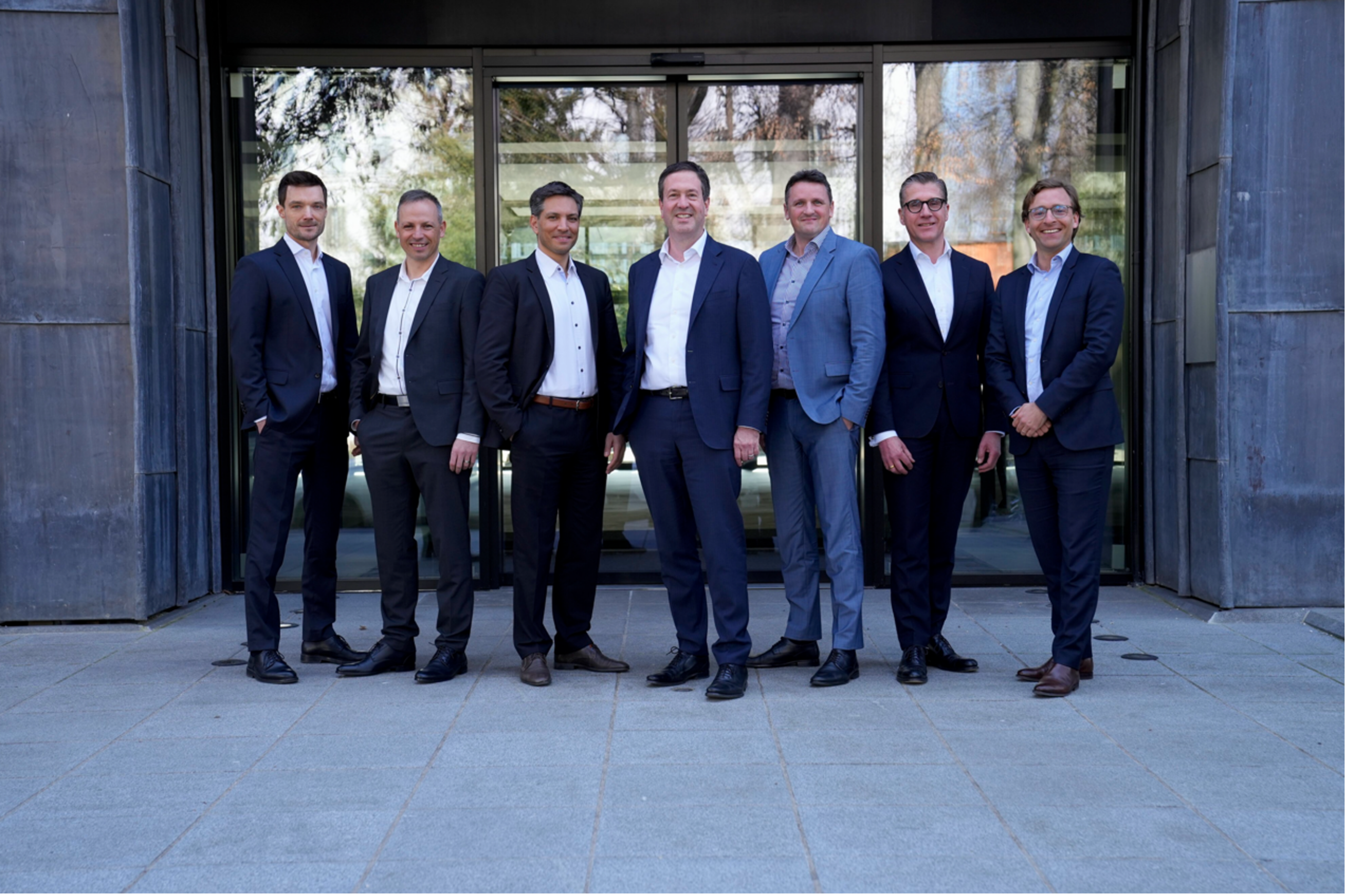
„With PDR-Team, we complement our end-to-end ecosystem – and with it our vision: from the first digital signal to the repaired dent, everything from a single source. What excites us most is not just the operational capacity – it’s the mindset. PDR-Team fundamentally rethinks the process: where others optimize incrementally, this team reimagines hail damage from the ground up. That is precisely the entrepreneurial mindset that mirrors the DNA of the Solvd Group – and that will take our ecosystem to the next level. Together, we are now building the infrastructure for the hail damage management of tomorrow.” Dirk Vogler, CEO Solvd Group.
„We made a deliberate choice: not just a financial investor, but a strategic partner. With the Solvd Group, we share a clear ambition: to redefine the global market for hail damage management – through technology, scale and genuine value for our customers. What connects us goes beyond business – it is a shared vision for the next chapter.“ Nathanael Alain, Co-Founder, PDR-Team Group.
Independent. Strengthened. For the whole market
PDR-Team remains what it has been for more than a decade: an independent specialist whose primary goal is to develop innovative solutions for the market as a whole. The founders are staying on board – and with them everything that makes PDR-Team what it is: points of contact, teams, leadership structure and processes remain entirely unchanged. The integration into the Solvd Group equips PDR-Team to serve the entire market with even greater capacity, speed and innovative strength – backed by the global network, technology and resources of the Allianz Group.
About PDR-Team
PDR-Team is a dynamic family business with a global presence. For over 10 years, the company has stood for innovative solutions and excellent service, particularly in the management of large-scale hail events – working with the most renowned insurers, dealerships and claims managers across multiple countries.
The PDR-Team Group unites several specialized companies under one shared mission: making claims management effortless. The international network includes PDR-Team entities in Germany, Switzerland, France, Belgium, Poland, Australia, South Africa and the USA – as leading hail damage service providers. The portfolio is further complemented by Hagelschadenhilfe HSH, an experienced hail damage specialist in Germany, and 3A Experten, an established expert appraisal office. Additionally, the Careoss Group – with its body and paint shops in France, Switzerland and Germany – extends the group’s capabilities toward fully integrated, end-to-end claims management.
All companies within the group share a clear focus on digitalisation and automation, consistently applied across all processes with one goal: efficient, customer-oriented claims handling from a single source.
The Innovation: the hail damage scanner Colibri
PDR-Team’s patented hail damage scanner Colibri is revolutionising damage analysis. Colibri creates a precise 3D model of the vehicle, documenting every damage point in detail and with exact positioning – guaranteeing maximum traceability and effectively eliminating requests for additional damage claims.